We scoop dog waste for a living. We see what's in Charlotte yards every single day. But this post isn't about what we do — it's about what happens to the waste that doesn't get picked up. Because what most people don't know could make you think twice about leaving it on the ground.
The EPA Classified Dog Waste as a Toxic Pollutant — in 1991
This isn't new information. It's just information nobody talks about.
In 1991, the Environmental Protection Agency classified pet waste as a nonpoint source toxic pollutant — the same category as herbicides, insecticides, oil, and chemical runoff. That classification has never been rescinded. It's still active under the Clean Water Act, Section 319.
A single gram of dog waste contains up to 23 million fecal coliform bacteria — nearly twice the concentration found in human waste. It carries parvo, giardia, salmonella, roundworms, hookworms, tapeworms, and more. Left untreated on the ground, it takes up to a year to decompose. The parasites stick around even longer — roundworm eggs can survive in soil for up to four years.
That means your kid playing barefoot in the backyard, the neighbor's toddler putting their hands in their mouth at the playground, or your other dog sniffing the wrong patch of grass — they're all at risk from waste that was deposited months ago.
When It Rains, It Flows — Straight Into Your Drinking Water Source
Here's the part that connects your backyard to the Catawba River.
Charlotte's stormwater system doesn't treat what it collects. When it rains, water flows off lawns, sidewalks, and streets into storm drains — and those drains discharge directly into creeks and rivers. No filtration. No treatment. Straight through.
Pet waste sitting on a lawn in Indian Trail gets washed into Goose Creek. Waste in Matthews ends up in Four Mile Creek. Waste in Waxhaw feeds into Twelve Mile Creek. Waste in Mint Hill and Charlotte proper runs into McAlpine and Little Sugar Creek. All of it flows into the Catawba River basin — which supplies drinking water to over 1.5 million people in the Charlotte metro area.
Mecklenburg County alone is home to over 218,000 dogs producing more than 52,000 pounds of waste every single day. Union County — one of the fastest-growing counties in North Carolina — is adding new households, new dogs, and new waste to the Goose Creek and Catawba watersheds every month. The EPA estimates that 2–3 days of waste from just 100 dogs is enough to close a bay and all watershed areas within 20 miles to swimming and shellfishing.
The excess nitrogen and phosphorus in pet waste triggers algal blooms — the green scum you sometimes see on ponds and slow-moving creeks around Charlotte. Those blooms deplete oxygen in the water, which leads to fish kills. NC DEQ has tracked 82 algal bloom events across the state in the past 12 months. In August 2025, Charlotte-Mecklenburg Stormwater Services issued a harmful algae bloom advisory for coves on Lake Wylie after confirming cyanobacteria — the same toxin-producing algae fueled by excess nutrients from sources like pet waste. Lake Norman has dealt with the same problem.
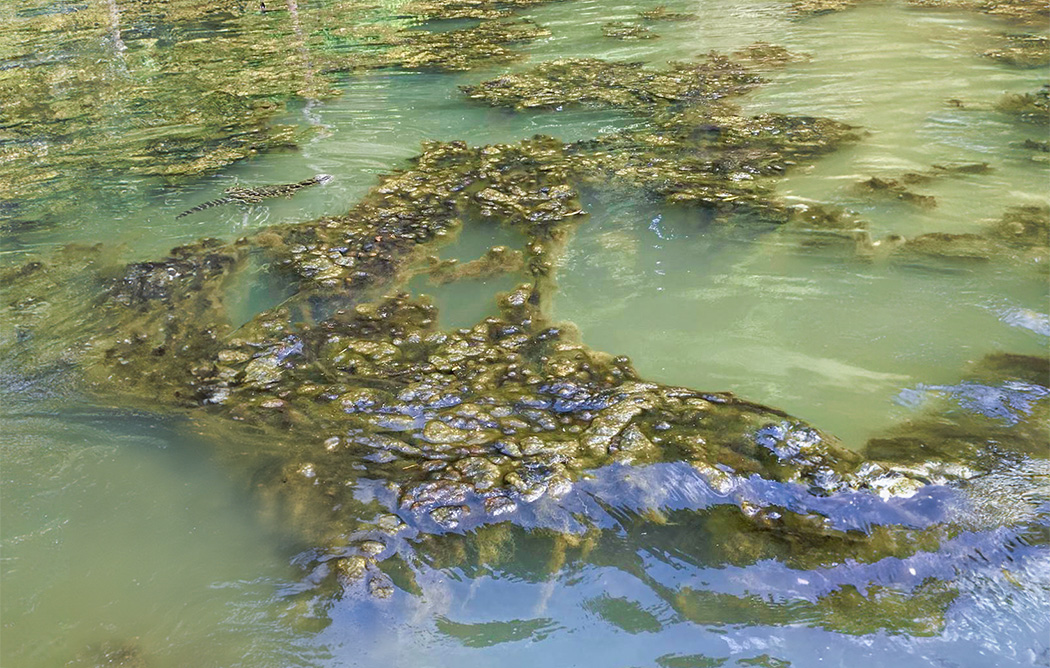
Goose Creek — Right Here in Indian Trail — Is Already Flagged
This isn't a warning about what might happen. It's already happening.
Goose Creek, which runs directly through Indian Trail and surrounding Union County — including Monroe and Marshville — is listed on the EPA's 303(d) impaired waters list specifically for fecal coliform bacteria. That's the federal government saying this waterway fails to meet water quality standards — and stormwater runoff is the number one source of impairment in the Charlotte metro.
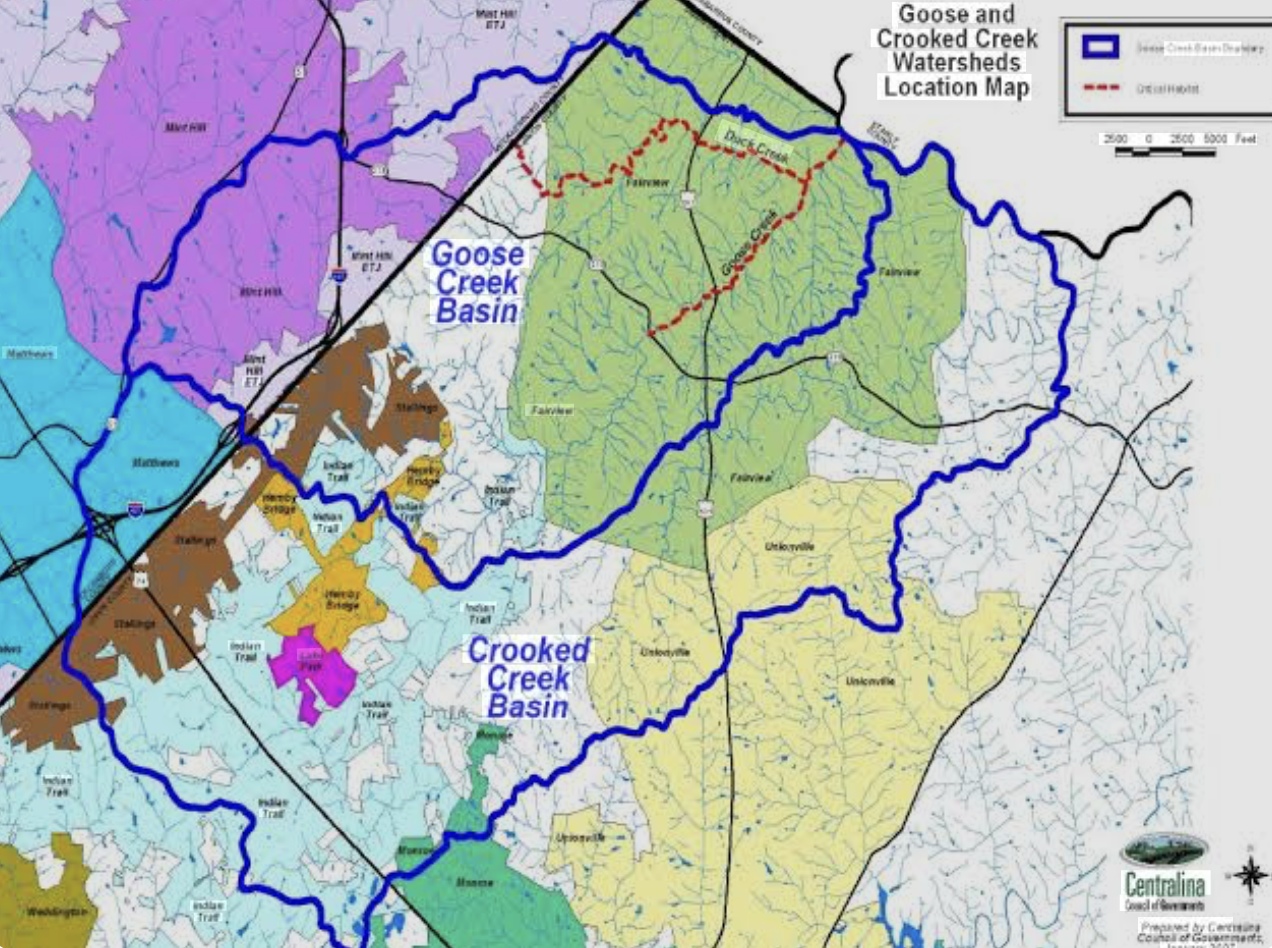
Goose Creek feeds into the Catawba River. The Catawba River feeds Mountain Island Lake. Mountain Island Lake is where Charlotte Water pumps drinking water for the city. The chain is direct and documented.
The Catawba Riverkeeper Foundation actively monitors these conditions, and Charlotte-Mecklenburg Stormwater Services has invested in public education through their "Scoop the Poop" program — important work that's putting the right information in front of dog owners. The challenge is that awareness alone hasn't been enough to shift behavior at scale.
40% of Dog Owners Don't Pick Up — And Don't Plan To
An EPA survey conducted in the Chesapeake Bay watershed found that 40% of dog owners don't pick up after their dogs because it's "too much work." Even more striking: 44% said they would still refuse even if threatened with fines or confronted by neighbors.
The EPA's own conclusion: "The reluctance of many residents to handle dog waste is the biggest limitation to controlling pet waste."
What Goes Into the Ground
E. coli, salmonella, giardia, cryptosporidium, roundworm eggs, hookworm larvae, campylobacter. Nitrogen that burns grass. Phosphorus that feeds algal blooms. Bacteria that close waterways.
What Most People Think
"It's natural fertilizer." (It's not — it's toxic to lawns.) "It breaks down fast." (Takes up to a year.) "The rain washes it away." (Into your drinking water source.)
The three most common things people believe about dog waste are all wrong. It's not fertilizer — the nitrogen content is so high it burns grass rather than feeding it. It doesn't break down quickly — untreated waste persists for months. And rain doesn't "wash it away" — it washes it into the water system.
And Then It Goes to the Landfill
Here's the part that even responsible dog owners don't think about.
When you bag your dog's waste and throw it in the trash, it goes to the landfill. In the landfill, it decomposes without oxygen — anaerobically — and produces methane. Methane is a greenhouse gas that's 80–84 times more potent than CO2 over a 20-year period, according to the IPCC's most recent assessment.
Pet waste makes up 8–12% of residential waste by weight. The US produces approximately 10.6 million tons of dog waste per year. Virtually all of it either sits on the ground contaminating waterways, or goes to landfill generating methane. There is almost no infrastructure anywhere in the country to divert it.
What Does This Mean for Charlotte Dog Owners?
It means the creek your kids play near in Indian Trail is federally impaired because of fecal bacteria — and pet waste is a documented contributor. It means the stormwater running off your street in Matthews, Waxhaw, Ballantyne, or South Charlotte goes directly into rivers without treatment. It means the 52,000 pounds of dog waste produced every day in Mecklenburg County alone has to go somewhere — and right now, that somewhere is either the ground, the water, or the landfill.
None of those are good options.
The first step is knowing the problem exists. Now you know.
Do your part. Every pile left on the ground is bacteria in your creek and methane in a landfill. The simplest thing you can do right now is keep your yard clean on a consistent schedule — that alone keeps waste out of the stormwater system and out of your local watershed. Get started with a weekly or biweekly cleanup and take one yard off the problem list.
Sources
- City of Eugene / EPA — Waterways Technical Report (23M bacteria per gram, 11 diseases, decomposition data)
- EPA — Nonpoint Source Pollution Management Program (1991 pollutant classification, Clean Water Act Section 319)
- Town of Wrightsville Beach — Pet Waste Impact Report (pathogen data, soil persistence)
- CDC — Parasites: Toxocariasis (Roundworm) (soil persistence, zoonotic risk)
- Charlotte-Mecklenburg Stormwater Services — Scoop the Poop (218,000+ dogs, 52,000 lbs/day, stormwater data)
- Catawba Riverkeeper Foundation — Swim Guide (water quality monitoring, Catawba basin data)
- NC DEQ — Goose Creek TMDL for Fecal Coliform (303(d) impaired waters listing)
- EPA — Impaired Waters and TMDLs (303(d) listing program)
- EPA Chesapeake Bay Program (pet waste behavioral survey — 40% non-compliance data)
- City of Charlotte — Harmful Algae Bloom Advisory, Lake Wylie (Aug 2025) (cyanobacteria confirmed, nutrient-driven blooms)
- IPCC — Sixth Assessment Report (AR6) (methane GWP: 80–84x CO2 over 20-year horizon)
- EPA — Landfill Methane Outreach Program (landfill methane emissions data)
- EPA — Pet Waste Fact Sheet (PDF) (E. coli, fecal coliform, watershed closure thresholds)